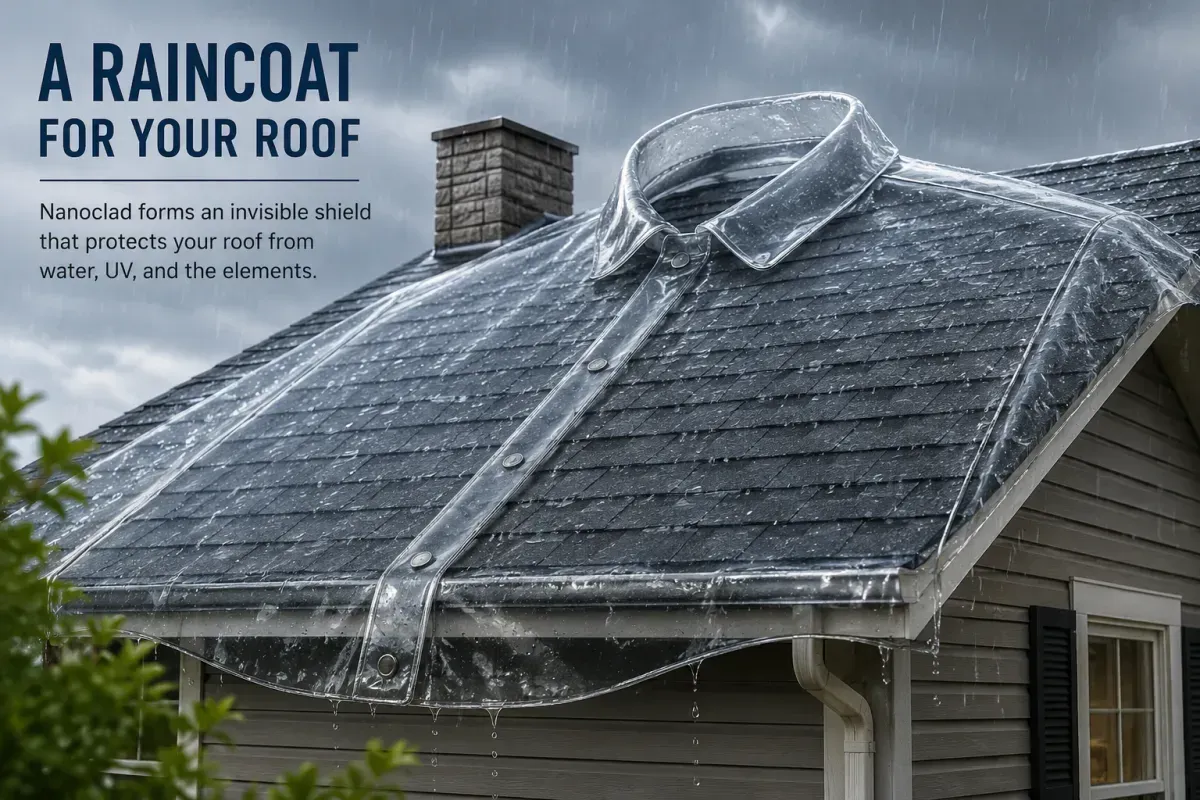
Why Atlantic Nanoclad Is Like a Raincoat for Your Roof in Atlantic Canada
How nano silica protection stops water from breaking down your shingles—one raindrop at a time
In Atlantic Canada, your roof doesn’t get a break.
Between heavy rain, coastal storms, snow, freeze-thaw cycles, and humid seasonal conditions in Nova Scotia, New Brunswick, Prince Edward Island, and Newfoundland and Labrador, asphalt shingles are constantly exposed to moisture.
Moisture is one of the biggest drivers of roof aging.
Think of your roof like something left soaking in a sink. At first, nothing seems wrong, but over time, water slowly weakens materials, loosens bonds, and accelerates breakdown.
Your shingles behave the same way.
What Happens When Water Soaks Into Your Roof
Every time it rains or snow melts, water does not just run off the surface. In Atlantic Canada’s wet coastal climate, moisture can repeatedly sit on and work into shingles due to humidity, wind-driven rain, and freeze-thaw cycles.
Over time, this leads to:
Granule loss as water weakens the adhesive bond holding protective layers in place
Shingle degradation from repeated wetting and drying cycles
Moisture intrusion that can contribute to mold, mildew, and premature roof aging
Accelerated wear from freeze-thaw stress common across Atlantic Canada winters
Like dishes left soaking too long, shingles exposed to constant moisture begin to break down faster.
Atlantic Nanoclad: A Hydrophobic Shield for Atlantic Canada Roofs
Atlantic Nanoclad Roof Shield uses advanced nano silica technology to form an invisible hydrophobic barrier that helps repel water at the surface level.
Instead of absorbing into shingles, water beads and rolls off, reducing long-term moisture exposure.
What this means for your roof in Atlantic Canada:
Hydrophobic protection: water beads and runs off instead of soaking into shingles, even during heavy coastal rainfall
UV and weather resistance: helps reduce damage from sun exposure and seasonal weather swings
Preserves granule bond: reduces water-driven wear that can loosen protective granules over time
Moisture barrier effect: helps limit moisture retention that can contribute to mold, mildew, and wood decay beneath shingles
Why Atlantic Nanoclad Is Different from Oil-Based Treatments
Some roof treatments use bio-oils or softening agents that temporarily restore flexibility or appearance.
While these may improve surface condition in the short term, they do not primarily block water penetration or UV exposure, which are two of the main causes of long-term shingle aging in Atlantic Canada.
Atlantic Nanoclad Roof Shield takes a different approach.
Instead of temporarily conditioning the surface, it forms a nano-scale protective layer designed to reduce both moisture absorption and environmental breakdown over time.
Extend Your Roof’s Life Without Replacing It
In Atlantic Canada, roofs face constant stress from moisture, storms, salt air, and seasonal temperature swings. Once water begins to penetrate and weaken shingles, aging accelerates quickly.
When water is repelled before it can soak in:
Shingles remain more stable over time
Granules stay bonded longer
Freeze-thaw damage is reduced
Overall roof lifespan can be extended
That is why homeowners across Nova Scotia, New Brunswick, Prince Edward Island, and Newfoundland and Labrador are increasingly considering Atlantic Nanoclad Roof Shield as a preventative solution.
It is designed to help protect roofs before costly replacement becomes necessary.
Protect Your Roof from the Atlantic Climate
Your roof is your home’s first line of defense, but in Atlantic Canada it is constantly exposed to some of the harshest moisture conditions in the country.
Atlantic Nanoclad Roof Shield helps defend against that exposure with nano silica hydrophobic protection designed to repel water, reduce moisture damage, and extend roof life.
Protect the roof you already have and help it last longer in Atlantic Canada’s demanding climate.
See if your roof qualifies—BOOK YOUR FREE ROOF INSPECTION