UV Damage: The Hidden Reason Asphalt Shingles Age Before Their Time in Atlantic Canada
Most homeowners in Atlantic Canada think of roof damage as something sudden: hail, wind, heavy rain, coastal storms, or heavy snow. But for asphalt shingles, one of the biggest causes of aging is much quieter and far more constant.
It happens every sunny day.
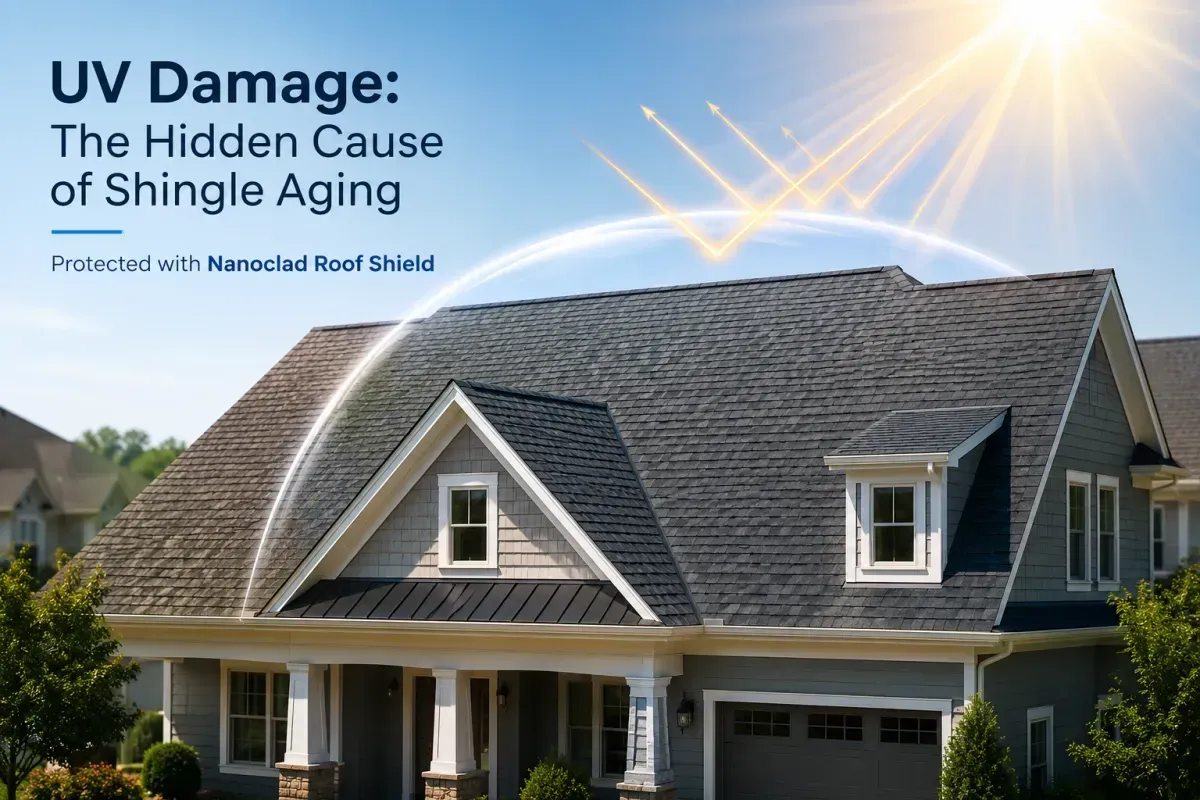
Ultraviolet (UV) radiation is one of the primary drivers of asphalt shingle aging. Over time, UV exposure breaks down the protective oils and binders that help shingles stay flexible, weather-resistant, and durable. As those materials degrade, shingles become dry, brittle, faded, and more vulnerable to cracking, granule loss, and moisture intrusion.
In regions like Nova Scotia, New Brunswick, Prince Edward Island, and Newfoundland and Labrador, roofs are also exposed to coastal salt air, freeze-thaw cycles, and seasonal storms. This combination makes UV protection even more important in extending roof life.
That’s why protecting a roof from UV exposure plays such an important role in Atlantic Canada home and building maintenance.
Why UV Exposure Is So Hard on Asphalt Shingles
Asphalt shingles are designed to handle outdoor conditions, but they are constantly exposed to sunlight, heat, moisture, wind, and rapid temperature swings. In Atlantic Canada, those swings can be especially harsh—ranging from hot summer sun to freezing winter conditions within months.
UV damage contributes to:
Drying and hardening of asphalt shingles
Loss of flexibility over time
Premature granule loss
Surface cracking and brittleness
Fading and weathered appearance
Reduced resistance to moisture and coastal weather exposure
Once shingles begin to dry out and lose flexibility, they struggle to expand and contract with temperature changes. This makes roofs more vulnerable during freeze-thaw cycles, coastal storms, high winds, and prolonged wet conditions common across Atlantic Canada.
UV damage doesn’t usually destroy a roof overnight. Instead, it slowly weakens it year after year until failure becomes unavoidable.
Why Oil-Based Treatments Don’t Address the Main Cause of Shingle Aging
Some roof rejuvenation products use bio-based oils derived from materials such as corn or soy. These treatments are often marketed as a way to restore flexibility to aging shingles by replenishing lost oils.
While that may temporarily improve flexibility, it does not address the primary cause of asphalt shingle aging: ongoing UV exposure.
UV radiation continues to break down asphalt materials every day, regardless of surface oil content. Without a strong UV-resistant barrier, shingles remain exposed to the same environmental stress that caused the aging in the first place.
This is where Atlantic Nanoclad Roof Shield takes a different approach.
Instead of simply replenishing oils, Nanoclad Roof Shield uses advanced nano silica technology to help form a protective barrier against UV radiation, moisture intrusion, and environmental wear.
With the ability to block up to 96% of UV rays, Nanoclad helps reduce one of the primary drivers of roof deterioration in Atlantic Canada’s demanding climate.
Roof Replacement Is Expensive — But Aging Starts Long Before Failure
By the time a roof looks severely aged, the damage has often been developing for years. In Atlantic Canada, homeowners may notice shingles becoming dull, curled, cracked, or losing granules faster due to harsh seasonal conditions.
In many cases, the roof may still not be leaking—but the materials are already significantly weakened.
That creates a challenge for homeowners across Nova Scotia, New Brunswick, PEI, and Newfoundland and Labrador:
Roof replacement is expensive, but waiting too long increases risk.
Moisture intrusion, storm damage, and freeze-thaw expansion can quickly accelerate once shingles lose integrity.
Atlantic Nanoclad Roof Shield was developed to help address this gap—helping protect roofs before full replacement becomes necessary.
How Atlantic Nanoclad Roof Shield Helps Protect Against UV Aging
Atlantic Nanoclad Roof Shield is a roof protection treatment designed to help extend the life of existing asphalt shingles across Atlantic Canada’s diverse climates.
It is composed of nano silica particles that bond with the roof surface to form an invisible protective layer.
Once applied, it helps reduce exposure to the key contributors to roof aging, including UV radiation, moisture absorption, salt air, and surface wear.
One of its most important benefits is UV protection. By blocking up to 96% of UV rays, Nanoclad helps slow down the long-term breakdown of asphalt shingles.
This helps roofs maintain flexibility, durability, and resistance to environmental stress for longer periods.
An Invisible Layer of Protection for Atlantic Canada Homes
Atlantic Nanoclad Roof Shield does not change the appearance of the roof like a coating or paint system. Instead, it is designed to bond at the surface level while maintaining breathability.
The goal is simple: help roofs last longer without changing how homes look.
After application, treated shingles often show improved water beading, a visible sign of enhanced hydrophobic protection—especially useful in Atlantic Canada’s frequent rain and coastal moisture conditions.
Protecting a Newer Roof Before Damage Sets In
Many homeowners only think about roof protection once damage is visible. However, in Atlantic Canada, the best time to protect a roof is often early in its life.
A newer roof still retains more of its original flexibility and structural integrity. Applying Atlantic Nanoclad Roof Shield early helps slow UV-driven aging before shingles become dry, brittle, or heavily weathered.
This is especially valuable for homes in coastal regions where salt air and strong sun exposure can accelerate deterioration.
Instead of reacting to damage, homeowners can take a proactive approach to roof longevity.
A Lower-Cost Alternative to Premature Roof Replacement
Atlantic Nanoclad Roof Shield is not intended to repair roofs that are already failing. Severely damaged or leaking roofs may still require replacement.
However, for roofs in serviceable condition, Nanoclad can help delay unnecessary replacement by reducing the environmental stress that leads to premature aging.
For homeowners across Atlantic Canada, this can mean:
Lower long-term maintenance costs
Reduced construction waste
Extended roof service life
Better protection through seasonal extremes
Built for Atlantic Canada Conditions
Your roof protects your home every day—but in Atlantic Canada, it faces some of the most demanding conditions in North America.
From intense UV exposure in summer to freezing winters, coastal salt air, and frequent storms, asphalt shingles are constantly under stress.
Atlantic Nanoclad Roof Shield is designed specifically with these conditions in mind, helping protect against UV damage, moisture penetration, and environmental wear.
For homeowners in Nova Scotia, New Brunswick, Prince Edward Island, and Newfoundland and Labrador, it offers a proactive way to extend roof life and protect property value.
Protect the Roof You Already Have
UV exposure is one of the most important—and most overlooked—factors in asphalt shingle aging. It works slowly but consistently, especially in Atlantic Canada’s varied climate.
Atlantic Nanoclad Roof Shield helps defend against that damage with nano silica protection designed to reduce UV exposure, repel moisture, and extend the useful life of your roof.
For homeowners who want to protect their roof before replacement becomes necessary, Atlantic Nanoclad offers a smarter, more sustainable option.
Protect the roof you already have—and help it last longer.
See if your roof qualifies—BOOK YOUR FREE ROOF INSPECTION